A complete guide to the Citadel of Pitigliano.
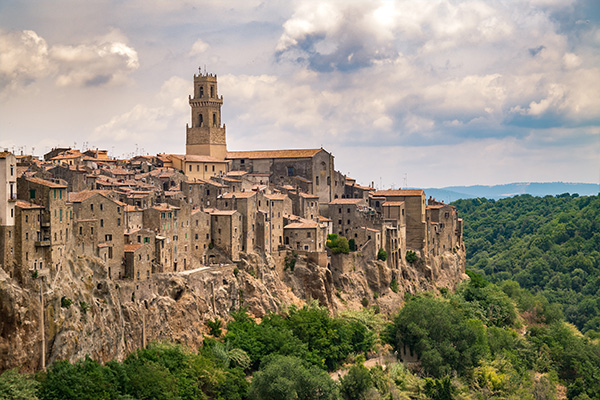
The Citadel of Pitigliano is a place to experience slowly. Perched on a tuff cliff in the Tuscan Maremma, it preserves narrow lanes, arches, stairways, small squares, homes carved into the rock and views shaped by centuries of history. Walking through its historic centre means exploring a village formed by tuff stone and by the families who governed it throughout the Middle Ages and the Renaissance.
Pitigliano is documented as early as 1061. After the Aldobrandeschi period, it passed to the Orsini family in 1313 through the union of Anastasia di Montfort and Gentile Orsini. The Orsini ruled the area for around three centuries and played a major role in shaping the Citadel and establishing Pitigliano as an important centre in Maremma.
Palazzo Orsini and the fortress
The Citadel’s main landmark is Palazzo Orsini, now a museum. The building originated between the 11th and 12th centuries and was later converted into a fortified residence. After it passed to the Orsini family, the complex was enlarged and renovated; in the 16th century, its defensive structures were adapted with the involvement of architect Antonio da Sangallo the Younger.
The fortress area is the monumental heart of the village. It is an excellent place to begin a walking route through the historic centre, noticing the buildings constructed in and carved from tuff, ancient doorways, quiet corners and views over the valley.
Do not miss:
- Palazzo Orsini and its museums.
- The fortress and the area of the old defences.
- The Cathedral of Saints Peter and Paul.
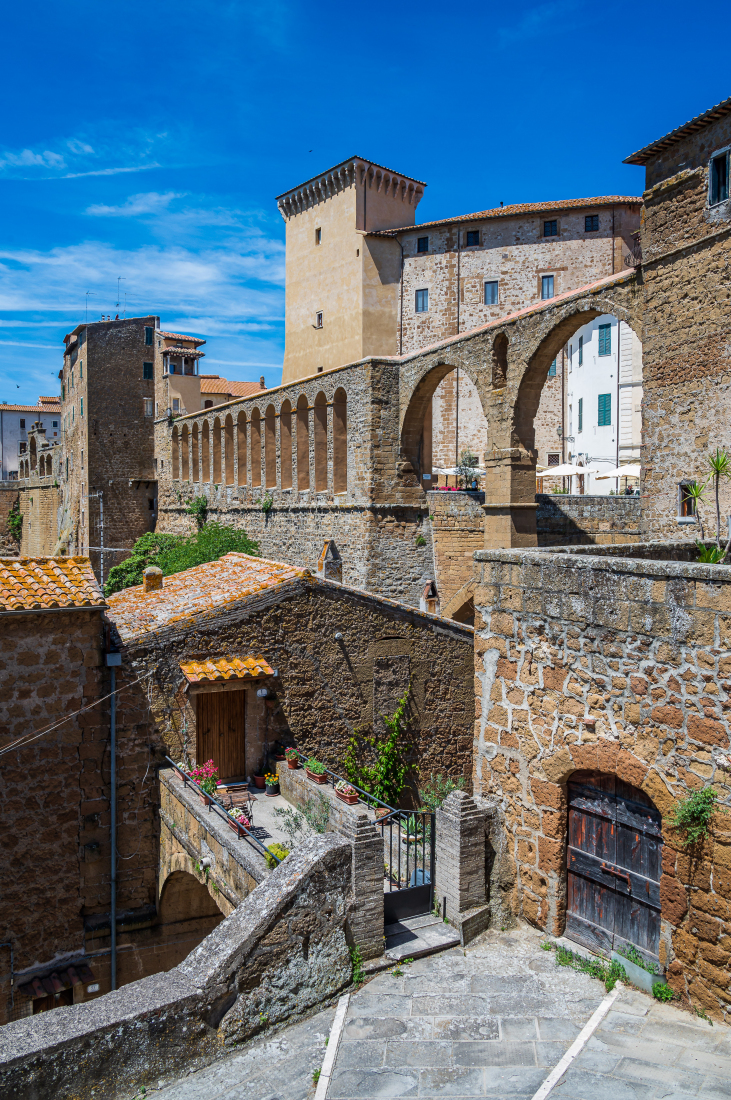
- The Medici Aqueduct, one of the town’s symbols.
- The Jewish Quarter and the Synagogue.
- The Citadel’s panoramic streets and viewpoints outside the old town.
The Casetta and a legend
La Casetta della Cittadella is set within the intimate atmosphere of the old town and is now a place designed for peace, privacy and harmony. To convey its charm, it is lovely to evoke the world of the Orsini court and the centuries when Pitigliano was a small fortified capital.
According to a legend whispered through the Citadel’s lanes, a young Orsini count occasionally sought refuge in a small secluded home, away from the formal halls of the palace and the endless conversations of court. The story says he arrived at dusk, accompanied by a trusted lady of the court, using secondary passages so as not to attract attention.
There, amid the silence of the ancient stone and the flickering light of candles, the count left the affairs of the county, rivalries and duties of power outside the town for a few hours. A lady of the court, said to be particularly skilled at playing the lute, turned those evenings into private moments of music, wine and confidences.
The most intriguing detail of the legend concerns a red rose placed on the windowsill. When the rose appeared, the count knew his guest was waiting for him. If he found a sprig of rosemary instead, the meeting had to be postponed: too many watchful eyes were nearby. No document confirms this tale, but a Citadel filled with passages, old doors and hidden corners has naturally inspired stories of secret and romantic encounters over the centuries.
Today, in a simpler and more genuine sense, the Casetta preserves that idea of a retreat: an intimate place to enjoy time, rest and a special stay in the heart of Pitigliano.
The Jewish Quarter and Little Jerusalem
Another essential part of the Citadel is the Jewish Quarter. The presence of a Jewish community in Pitigliano has been documented since the 15th century, and the quarter preserves the memory of a history central to the town’s identity.
The Synagogue, built in 1598, remains one of the most important places to visit. Its rooms and related spaces provide an insight into daily life in the community, including the matzah oven, kosher-wine cellar, ritual bath and former butcher’s shop.
Because of this long-standing presence and the historical coexistence of communities, Pitigliano is known as “Little Jerusalem,” a name that gives the visit to the town even greater depth.
How to experience the Citadel
To fully appreciate the Citadel of Pitigliano, do not limit yourself to a quick visit. Take time to wander without a precise destination, pause in front of an old doorway, notice the homes built into the tuff and find a viewpoint at sunset.
A rewarding day can begin at Palazzo Orsini and the fortress, continue through the historic streets and the Jewish Quarter, include a break at a local trattoria and end with an evening walk. Once the lights come on and the bustle of visitors fades, Pitigliano reveals its most intimate side.
Staying at La Casetta della Cittadella allows you to enjoy precisely this experience: not simply visiting Pitigliano, but feeling the rhythm of the village, listening to its quiet and letting its history surround you.